‘Beyond insulting’: Syracuse’s offer to erect a Hiawatha statue instead of tear down Columbus met with disbelief from Native leader
‘Beyond insulting’: Syracuse’s offer to erect a Hiawatha statue instead of tear down Columbus met with disbelief from Native leader
Sacred lake, tainted lake
Goodbye, Columbus?
An elusive deal
Before white settlers came to Onondaga Lake, before the city of Syracuse grew along its shore, before the pristine waters became one of the most polluted bodies of water in the United States, it was a sacred place for the Onondaga Nation.
Local officials aware of that history have expressed a desire to transfer a parcel of lakeshore land back to the Onondagas, one of the native peoples who populated and governed much of upstate New York and parts of Canada before the American Revolution. But after 14 years, the effort is stalled amid issues related to taxes, the lake’s cleanup and, most recently, a nearby statue of Christopher Columbus.
Both sides are frustrated, though a deal is not out of reach.
“It’s not called Onondaga Lake for some arbitrary reason,” said nation member Betty Hill on a recent visit to the lake. “They know that it belonged to us, they know that it was part of our history for thousands of years.”
Like other Indigenous people, the Onondaga have been trying to reacquire more of what was once a vast expanse of land in the state, beyond their federally recognized territory.
But reacquiring property along the lake would be a particular prize.
Onondaga Lake is revered as the place where a figure known as the Peacemaker, helped
Many people believe the confederacy influenced the drafters of the U.S. Constitution.
The nation eventually lost its foothold on the lake, which became polluted in the 19th and 20th centuries as industries dumped mercury, salt and other contaminants into the water. The lake is much cleaner now after restoration efforts, but there are still signs warning that its fish may be harmful to eat.
Yet the lake is still “a living relative to our people,” according to Sid Hill, the Tadodaho, or chief, of the nation. He told Onondaga County Executive Ryan McMahon in a letter this March that “We have ceremonies which need to be practiced on its shores and other obligations.”
County lawmakers considered returning some land in 2011 following advocacy spearheaded
Legislators passed a nonbinding resolution to return a parcel
Little progress has been made since.
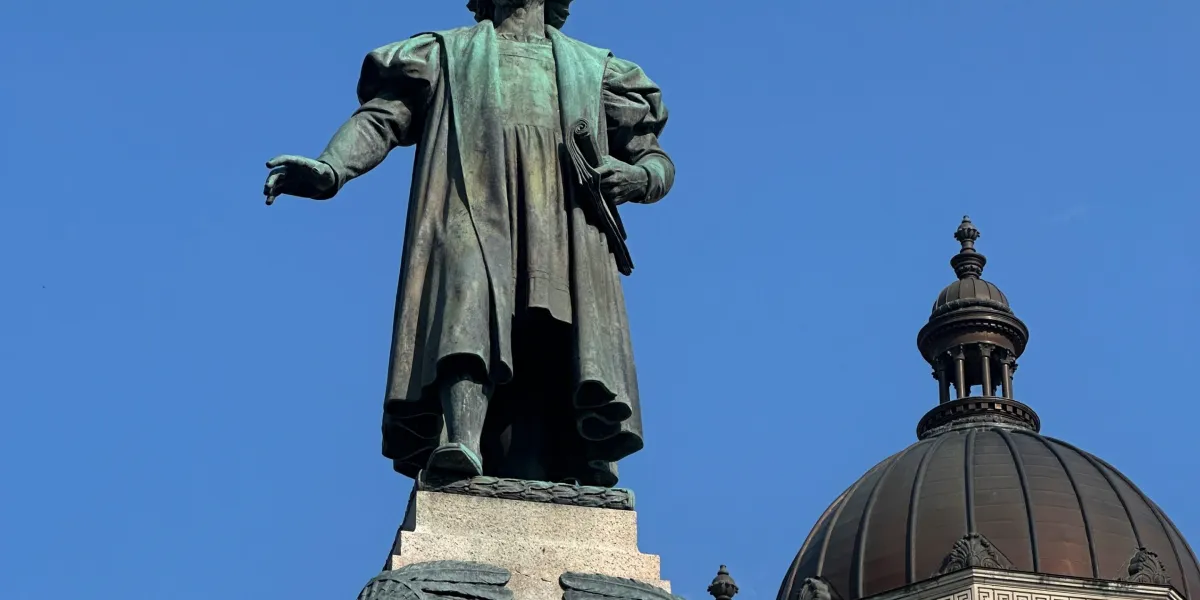
Some nation members believe the county is coming up with issues to foil progress. As an example, they point to the statue of Columbus that has stood atop a pillar in downtown Syracuse since 1934.
The Onondagas support plans announced
The statue is still standing years later amid a pushback from supporters, who see Columbus as a symbol of Italian American pride.
It became mixed up in land talks this summer. An aide to McMahon told Withers in an email that if the Onondaga lakeshore land transfer is to serve as a “symbolic gesture of healing and partnership,” then demands to remove the Columbus statue seem at odds with that goal.
The email suggested the nation embrace an alternate idea of adding a statue of Hiawatha as a way to potentially “help bridge the divide between two very passionate sides.”
Betty Hill, who is married to Sid Hill, said placing a Hiawatha statue next to Columbus is “beyond insulting.”
“I guess that’s politics for you. You give up something for this, and I’ll trade you off for this,” Sid Hill said. “What do we have to trade? We don’t have anything. We have just a small piece of land left.”
McMahon said he was merely seeking clarification on the issue from the Onondagas. The county does not have control over the statue and it is not a bargaining chip, he said.
What McMahon does want, however, is for the Onondagas to pay taxes on other parcels of land that have been reacquired
He also wants a commitment the nation will not sue over the lake’s cleanup, which has been criticized as insufficient
“If they can be addressed, then I think we can get to the table, and I think we can hunker out a deal,” McMahon said.
The tax issue could be the trickiest one to resolve. An attorney for the Onondaga, Joe Heath, said that under state law, it isn’t required to pay taxes on land recognized as Onondaga territory in the 1794 Treaty of Canandaigua.
In the meantime, Betty Hill said the Onondagas are not going anywhere.
“We’re not going to stop in this quest to gain a piece of this back for our people and our confederacy,” she said.
About the Author

Claire Dubois
View all articlesComments (0)
No Comments Yet
Be the first to share your thoughts on this article!