How Would Russia Treat a Ukraine Peace Deal? Chechnya and Georgia Offer Clues.
How Would Russia Treat a Ukraine Peace Deal? Chechnya and Georgia Offer Clues.
The Chechen wars
What Stands in the Way of a Putin-Zelensky Meeting?
‘If Russia feels that it can safely break the agreement, they will’
Zelensky Calls for Putin Talks as Peace Efforts Stall
Sign up for our free weekly newsletter
Remind me next month
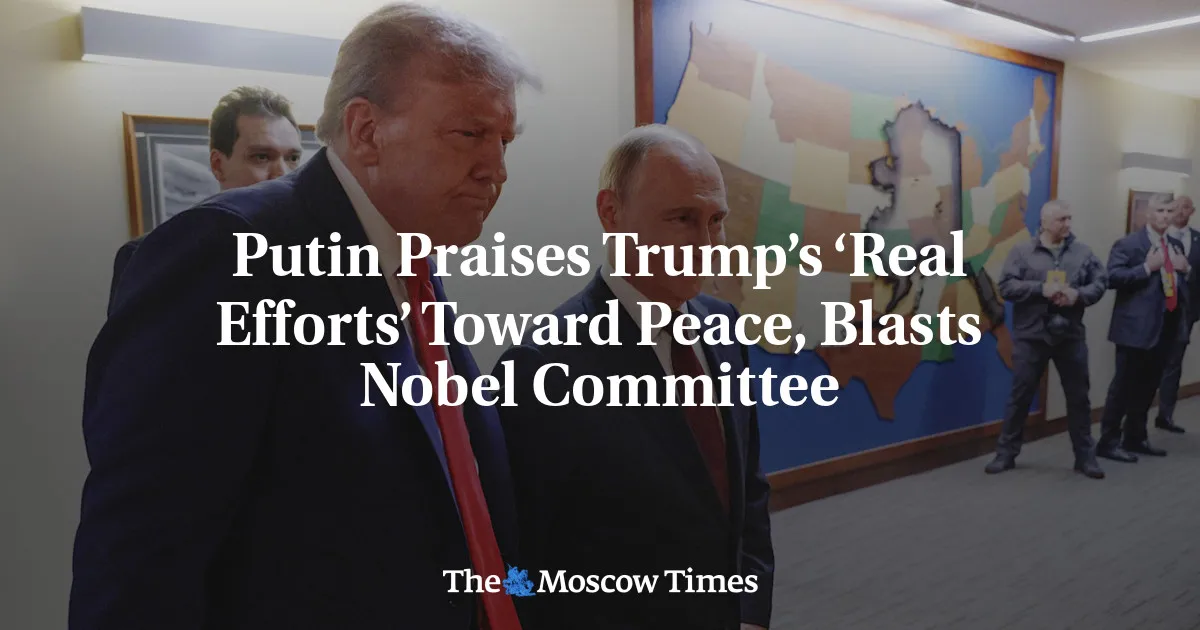
U.S. President Donald Trump’s hurried diplomatic push with both Russia’s Vladimir Putin and Ukraine’s Volodymyr Zelensky this month has so far done little to reconcile the fundamental discord between each warring side’s conditions for peace.
But even if they could reach a lasting peace agreement, Kyiv remains dispirited
Driving Ukraine’s thinking is a fear that Russia could simply invade again if Kyiv is not given adequate Western security guarantees.
Experts told The Moscow Times that even if a peace deal is reached, Russia’s pattern of circumventing or outright violating the terms of its agreements should invite skepticism of its ability to abide
Modern Russia’s history of controversial peace deals dates back to the chaotic years following the fall of the Soviet Union.
When the Chechen republic of Ichkeria declared independence in the winter of 1991, Moscow suddenly had one such crisis close to home in the strategically important North Caucasus region. After three years of failing to thwart the movement through clandestine means, President Boris Yeltsin ordered a ground and air campaign to neutralize the separatists.
According to Marat Ilyasov, a professor at the College of the Holy Cross and expert on the wars in Chechnya, it was during this conflict that Russia debuted the brutal strategy of subduing perceived security threats that drives its war in Ukraine today.
“As [Russia] did with Georgia — annexing territories — so they did the same with Ukraine, but it all goes back to Chechnya at the beginning,” he told The Moscow Times, referring to other international conflicts that Russia would go on to fight.
Ilyasov was living in Chechnya in the 1990s when Russia pounded regional capital Grozny with artillery and sent in 40,000 troops “to restore the constitutional legality, law and order, and peace in the Chechen republic.”
When the war ended after two years, it came at the cost of more than 50,000 deaths, the majority of whom were civilians.
Two agreements mark the end of the First Chechen War: the 1996 Khasavyurt Accords Accords and the 1997 Russia-Chechnya Peace Treaty.
Both outlined an understanding that disputes would not be settled through violence, with the first in particular disallowing the use of “armed force or threatening its usage in the resolution of all issues.”
For a time, it looked like these might prove sufficient to settle the two sides’ major grievances. But Chechnya’s independence remained an open question, and three years later, directed
According to Ilyasov, the 1999 invasion marking the beginning of the Second Chechen War represented a breach of the accords that ended the first.
“Russia broke the conditions of the peace deals, that’s for sure,” Ilyasov told The Moscow Times. “Yes, there were security issues, but there was nothing that was not solvable, and the security issues were not so big that they should have required a second war.”
Instead of negotiating with the government in power, the Kremlin launched a decade-long offensive that would see thousands more deaths and conclude with the Kremlin-friendly Kadyrov family in power.
For Ilyasov, Chechnya’s experience highlights a simple truth: if Moscow perceives a security threat, no agreement will prevent it from invading a region again.
“If they are looking at preserving their country as it is, there is nothing that will get them this peace deal,” he said, referring to Russia’s unwillingness to return annexed Ukrainian territory. And if Ukraine does get a peace deal, he continued, “it can be a matter of several years, but the Russians will come back.”
Russia had not yet finished its military operation in Chechnya when conflict sprung up elsewhere in the Caucasus.
It was August of 2008 when President Mikheil Saakashvili of Georgia ordered his troops to push back against Russian-backed forces in the breakaway region of South Ossetia.
Russia responded
After five days of fighting, the Russo-Georgian War ended not with the kind of comprehensive peace deal that Presidents Trump and Putin are pushing for in Ukraine, but a hastily arranged ceasefire known as the Six Point Plan.
Its provisions, including an end to the fighting and allowing humanitarian aid to flow, remain the binding agreement on halting the war.
Yet in the years since its signing, Georgian experts say, Moscow has broken key terms of the Six Point Plan, namely point number five which requires that Russian troops “withdraw to the positions held before hostilities began in South Ossetia.”
To do this, Moscow would have to remove its soldiers from the entirety of South Ossetia, losing a vital
Shota Utiashvili, a senior Georgian Interior Ministry official during the conflict, told The Moscow Times that the Six Point Plan was the best agreement Georgia could get at the time, even if it did not have the mechanisms to prevent Russia from continuing to occupy territory.
“There were not many options on the table,” Utiashvili said. “It was pretty clear that the Russians would maintain control of the territories that they held.”
Within a few years, Georgia’s experience was overshadowed
American and European officials are now pushing for a bilateral summit between Putin and Zelensky as the next step in a peace process to end the fighting.
Utiashvili, who also oversaw peace talks with Russia after the war, said that the biggest lesson Georgia can provide at this moment is the importance of security guarantees from the West, something Russian officials have already voiced skepticism over.
“The key thing now is not the wording of the agreement, because if Russia feels that it can safely break the agreement, they will,” he said. “The key thing is the strength of security guarantees for Ukraine.”
“The [Ukrainian] people need to know that if Russia attacks again,” he added, “the cavalry will come and they won’t be left for themselves.”
A Message from The Moscow Times:
Dear readers,
We are facing unprecedented challenges. Russia's Prosecutor General's Office has designated The Moscow Times as an "undesirable" organization, criminalizing our work and putting our
These actions are direct attempts to silence independent journalism in Russia. The
We, the
Your support, no matter how small, makes a world of difference. If you can, please support us monthly starting from just $2. It's quick to set up, and every contribution makes a significant impact.
About the Author
Anna Petrova
View all articlesComments (0)
No Comments Yet
Be the first to share your thoughts on this article!