Killing the messengers: Journalists in the Gaza Strip are targeted
Killing the messengers:
War without witnesses
Ever since an Israel Defense Forces (IDF) sniper’s green-tipped, armour-piercing bullet killed Shireen Abu Akleh on 11 May 2022,
Abu Akleh, the renowned Al Jazeera
Two years on, the killing of
Last week, the South African National Editors’ Forum (Sanef) condemned the killing of five Palestinian
“This is no tragic accident,” Sanef stated. “It is part of a blatant and premeditated assault on press freedom.”
Israel insists it targets Hamas operatives. Yet it rarely produces evidence. The United Nations reports that since October 2023, 242 Palestinian
“
The silencing began with Abu Akleh’s killing, which sparked global outrage. The UN described “well-aimed bullets [fired] at
Still, no one was held to account.
Soon after, Al Jazeera’s Gaza newsroom was bombed.
Hamas militants’ breaching of Israel’s fortified border on , in which people were killed in kibbutz towns and hostages seized, drew global condemnation. But Israel’s retaliation unleashed a campaign that many human rights groups now label genocide — which includes a deliberate attempt to starve Gaza, flatten its cities and break its people.
The human toll is staggering.
Malnutrition and famine haunt survivors.
Yet the world might never know the full scale of the catastrophe without local
That is why they are being hunted. “The only reason anyone kills
International law is unambiguous —
And yet, as Gaza shows, these legal guarantees mean little when the perpetrators act with impunity and powerful allies shield them from consequences.
In November 2024, the ICC issued arrest warrants for Israel’s Prime Minister Benjamin Netanyahu and Defence Minister Yoav Gallant, as well as the Hamas commander Mohammed Deif. The symbolism was seismic — both state and non-state actors charged in the same breath.
The responses exposed global fault lines.
The United States rejected the warrants, insisting there was “no equivalence” between Israel and Hamas.
South Africa, Spain and Sweden welcomed the move, with Pretoria co-launching The Hague Group to defend the court’s jurisdiction.
France expressed “support for ICC independence” but avoided endorsing the specific charges.
Germany suspended arms exports to Israel.
France’s President Emmanuel Macron floated a UN peacekeeping mission for Gaza.
Whether symbolic or enforceable, the warrants marked a turning point — a rare moment when the machinery of international justice acknowledged the war’s double-edged criminality.
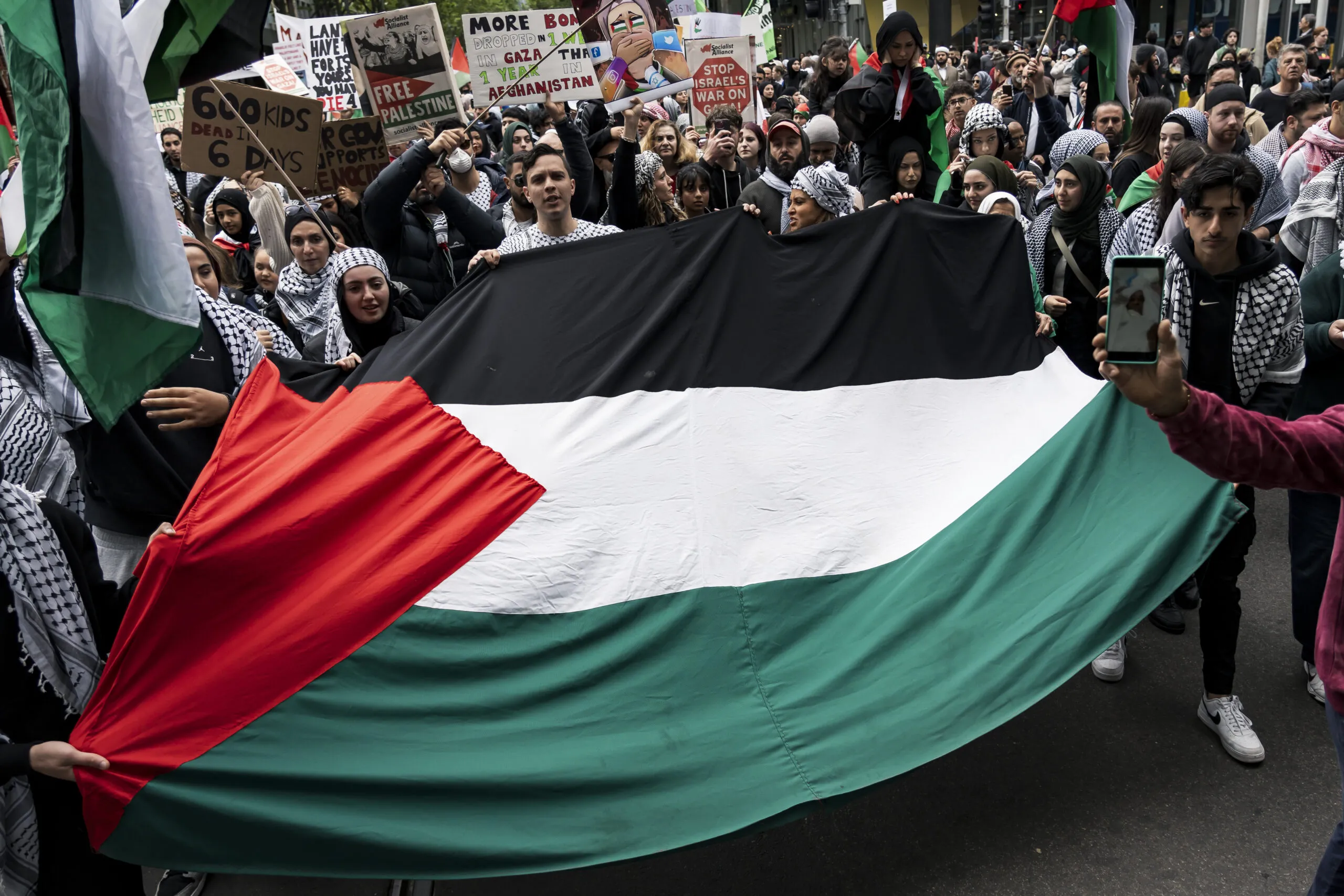
While governments hesitated, the streets erupted. From Washington to Dhaka, Gaza became a rallying cry for one of the most sustained protest movements since the 2003 anti-Iraq war marches.
In the US, more than 2 600 demonstrations took place, with the March on Washington for Gaza in January 2024 drawing 400 000 people. In Europe, Paris, Berlin, The Hague and London witnessed marches of hundreds of thousands. Barcelona read aloud the names of Gaza’s dead children. In Africa, vigils and rallies were held in numerous countries, from Durban to Cairo. In Asia, protests in Dhaka, Jakarta, Kuala Lumpur and Karachi tied the Palestinian cause to anti-colonial struggles.
The message was consistent — global civil society refuses silence where official diplomacy falters.
Wars in Gaza are not new: they occurred 2008, 2012, 2014 and 2021. But the current war is unfolding in a hyper-connected world. Smartphones and social media
Thus, the attacks on
The roots of Gaza’s misery stretch back to 1948, when Israel’s creation displaced about 700 000 Palestinians, many into Gaza. Israel occupied the Strip in 1967, withdrew settlements in 2005, but sealed it under blockade with Egypt. Hamas’s 2006 election victory deepened the siege. Since then, Gaza’s 2.3 million residents have endured repeated attacks and economic strangulation.
The current war is the deadliest yet — tens of thousands killed, famine imposed, international law flouted. Ceasefire calls have been ignored. The occupation, critics warn, is sliding into annexation.
For South Africans, the parallels are raw. During apartheid,
In 1985, Archbishop Desmond Tutu warned: “If you are neutral in situations of injustice, you have chosen the side of the oppressor.”
Forty years later, his words land with the same moral clarity in Gaza as they once did in Soweto.
The killing of Abu Akleh symbolised a turning point. Since then, more than 240 of her colleagues have paid the same price. Their deaths are not just personal tragedies; they are attacks on global truth-telling.
History will record who stood silent while the cameras went dark — and who demanded accountability. Until justice is done, the cameras must keep rolling. Because without them, Gaza’s story — and the world’s conscience — risks vanishing into silence.
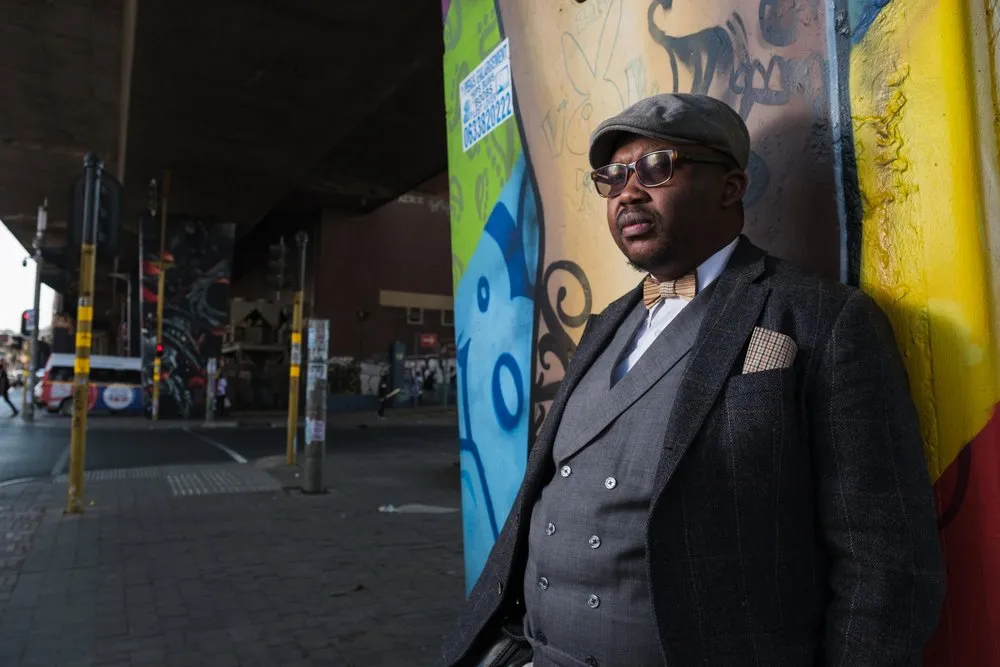
Marlan Padayachee is a veteran political, foreign and diplomatic
About the Author

Zara Mbatha
View all articlesComments (0)
No Comments Yet
Be the first to share your thoughts on this article!