Lib Dems back Bank of England after Farage criticism
Lib Dems back Bank of England after Farage criticism
Farage urges Bank of England boss to stop bond sales
We'll stop Farage turning UK into Trump's America, says Davey
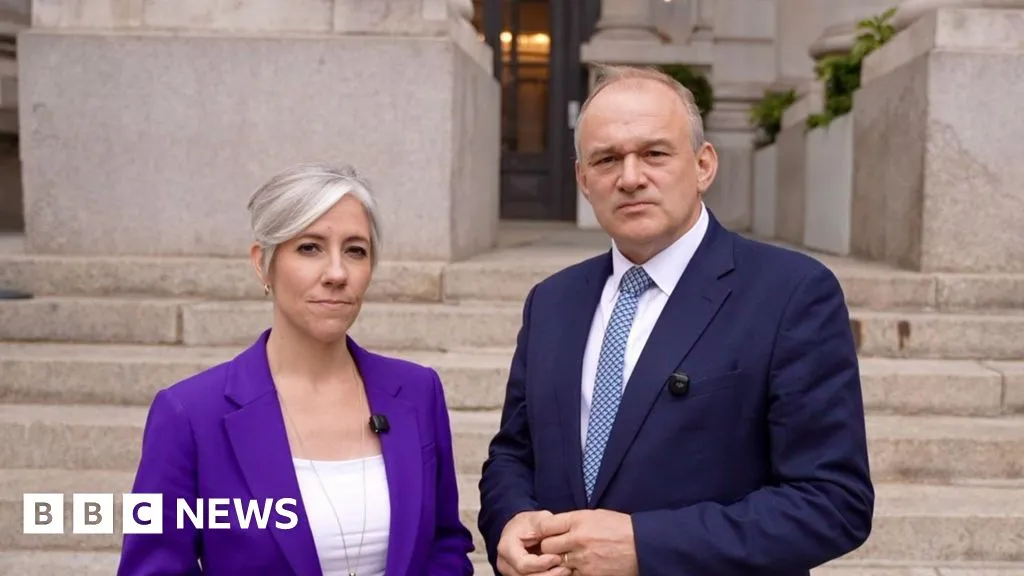
On Friday, party leader Sir Ed Davey and his deputy Daisy Cooper met the bank's governor Andrew Bailey to "reaffirm support" for the Bank's autonomy.
It comes two weeks after Nigel Farage met Mr Bailey to argue for the end of BoE bond sales, known as quantitative tightening, claiming it is costing taxpayers billions and driving up debt.
Sir Ed accused Farage of "putting his obsession with mimicking Donald Trump ahead of what is in the best interests of the British people"
Reform UK has been approached for comment.
Sir Ed has pledged to lead the fight against Reform UK - using his Lib Dem conference speech to argue his party had a "moral responsibility" to challenge Farage.
Speaking after his meeting at the Bank's Threadneedle Street HQ, Sir Ed said: "Liberal Democrats will stand firmly behind Bank of England independence, just as we have stood against recent attacks on the independence of our judiciary.
"Trump's threats to sack governors of the Fed if they don't do what he wants are causing economic panic in the United States," Sir Ed said.
"That is the last thing we need here at home - we cannot let Trump's America become Farage's Britain."
Speaking to
The Bank began its quantitative tightening programme in 2022, unwinding the emergency support it brought in after the 2008 financial crisis.
That earlier process, known as quantitative easing, saw the Bank electronically create billions of pounds to buy UK government bonds, a form of debt, in a bid to prop up the UK economy
The Bank subsequently launched new rounds of QE after the eurozone debt crisis, the Brexit referendum and the coronavirus pandemic.
The Bank is now in the process of selling these bonds for less than it paid for them, with losses being picked up
Reform has criticised the process, with deputy leader Richard Tice branding it a "systemic misuse of taxpayers' money" in a letter to Bailey in June.
He also blamed it for increasing the costs of long-term government debt, which recently rose to a 27-year high.
Farage and Tice visited the Bank for talks with Bailey on 25 September, after the Bank chief agreed to a meeting.
Speaking to
But he added that the "huge multibillion cost" meant it had an impact on taxation, traditionally a matter for Parliament, and could "change the decisions the chancellor makes" at November's Budget.
They also pressed the Bank to relax its stance on cryptocurrencies, accusing it of holding back innovation.
Sign up for our Politics Essential newsletter to keep up with the inner workings of Westminster and beyond.
About the Author

Emma Wilson
View all articlesComments (0)
No Comments Yet
Be the first to share your thoughts on this article!