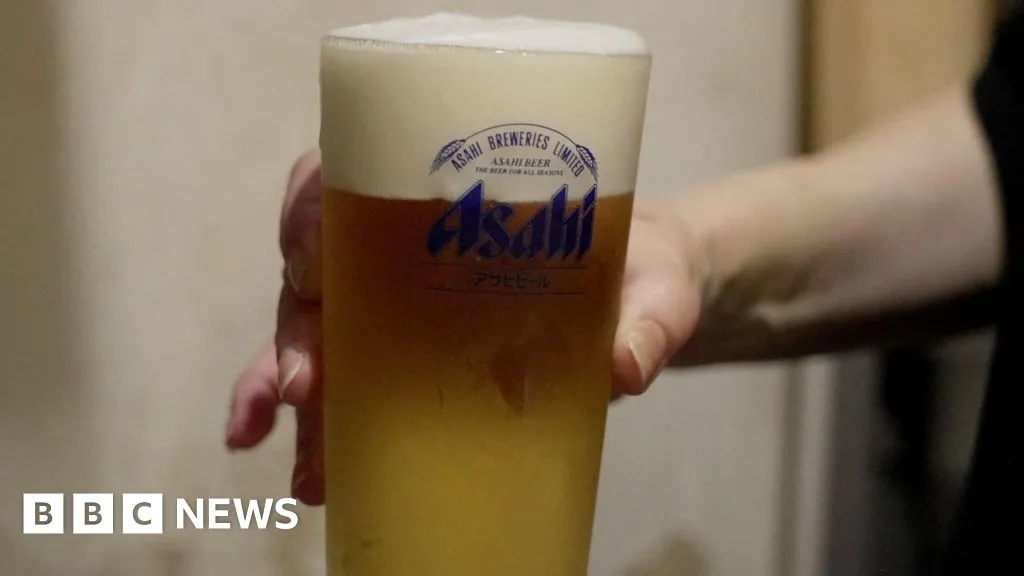
How hackers forced brewing giant Asahi back to pen and paper
How hackers forced brewing giant Asahi back to pen and paper
Japanese brewing giant Asahi hit
Asahi restarts beer production after cyber-attack
Its owner, Sakaolath Sugizaki, expects to get a few more soon, but she says her supplier is keeping the bulk of its stock for bigger customers.
That's because Asahi, the maker of Japan's best-selling beer, was forced to halt production at most of its 30 factories in the country at the end of last month after being hit
While all of its facilities in Japan - including six breweries - have now partially reopened, its computer systems are still down.
That means it has to process orders and shipments manually - using pen, paper and fax machines - resulting in much fewer shipments than before the attack.
Asahi accounts for about 40% of Japan's beer market, so its problems are having a major impact on bars, restaurants and retailers.
The company has apologised "for any difficulties caused
The
Hisako Arisawa, who runs a liquor store in Tokyo, says she is worried about her customers as she can only get a few bottles of Super Dry at a time and expects the disruption to go on for at least a month.
The problem isn't just affecting beer, she adds, there are also shortages of Asahi's soft drinks, such as ginger beer and soda water.
Last week, some of the country's biggest convenience store chains warned their customers to expect shortages.
FamilyMart said its Famimaru range of bottled teas, which are made
7-Eleven halted shipments in Japan of Asahi products, while Lawsons also said it expected shortages.
Mr Nakano, who didn't want to share his first name, works for an alcohol wholesaler.
While some shipments from Asahi have resumed, he says he is only getting about 10-20% of the normal amount.
His orders are now handwritten and taken
Asahi also owns big brands in Europe - such as Peroni, Grolsch, and the British brewer Fuller's - but the firm has said those operations have not been affected
Ransomware group Qilin - which has previously hacked other major organisations - has claimed responsibility for the attack on Asahi.
It operates a platform that allows users to carry out cyber-attacks in exchange for a percentage of extortion proceeds.
Asahi has not confirmed the nature of the attack on its operations but has said data suspected to have been leaked in the hack had been found on the internet.
It is the latest in a series of cyber-attacks
Travellers were delayed at a number of European airports in September after a ransomware attack disrupted check-in and boarding software.
Back in Japan, a cyber-attack paralysed operations at a container terminal in the city of Nagoya for three days in 2024.
Japan Airlines was also hacked last Christmas, causing delays and cancellations to domestic flights.
While Japan's
This issue was highlighted last year when officials finally stopped asking people to submit documents to the government using floppy disks, even though they fell out of fashion in much of the rest of the world in the 1990s.
Japan is vulnerable to cyber-attacks "given a reliance on legacy systems and a society with a high level of trust," Cartan McLaughlin from Nihon Cyber Defence Group told the
Many organisations in the country are not prepared for attacks and are willing to pay ransoms, which makes them attractive to hackers, he added.
Speaking at a news conference this week, Japan's Chief Cabinet Secretary Yoshimasa Hayashi said the Asahi cyber-attack was being investigated.
"We will continue to improve our cyber capabilities," he added.
Earlier this year, the Japanese government passed a landmark law giving it more powers in the event of cyber-attacks.
Experts have praised the Active Cyber Defense Law (ACD), because it allows the government to share more information with companies, and also empowers the police and Japan's Self-Defense Forces to mount their own attacks to neutralise attackers' servers.
But that is little consolation to small businesses like Ben Thai restaurant and its customers.
Owner Sakaolath says she's not sure what will happen the next time she puts in an order for Super Dry, and nor do many others across Japan.
Additional reporting
About the Author

Emma Wilson
View all articlesComments (0)
No Comments Yet
Be the first to share your thoughts on this article!